Most people are familiar with the idea of subscribing to something. Music, television, software, gym memberships. You pay a monthly fee, you get access to what you need, and when your circumstances change you are not stuck in something that no longer fits your life. That logic has been working its way into the automotive world for a few years now, and in 2026 it is firmly part of the mainstream conversation.
So what is car subscription exactly, and why are so many consumers and businesses paying attention to it?
At its simplest, a car subscription is a model where you pay a recurring weekly or monthly fee to access a vehicle, without buying it or committing to a long-term lease. Most car subscription services bundle the costs that would normally sit on your shoulders as an owner, things like insurance, maintenance, servicing, and registration, into that single monthly payment. You get the car. You use it for as long as you need it. When your situation changes, you can switch, upgrade, or walk away without the kind of financial and contractual complexity that comes with ownership.
That is the core of how car subscription works, and it is a genuinely different kind of arrangement from anything that has existed in the automotive market before.
How Does Car Subscription Work in Practice?
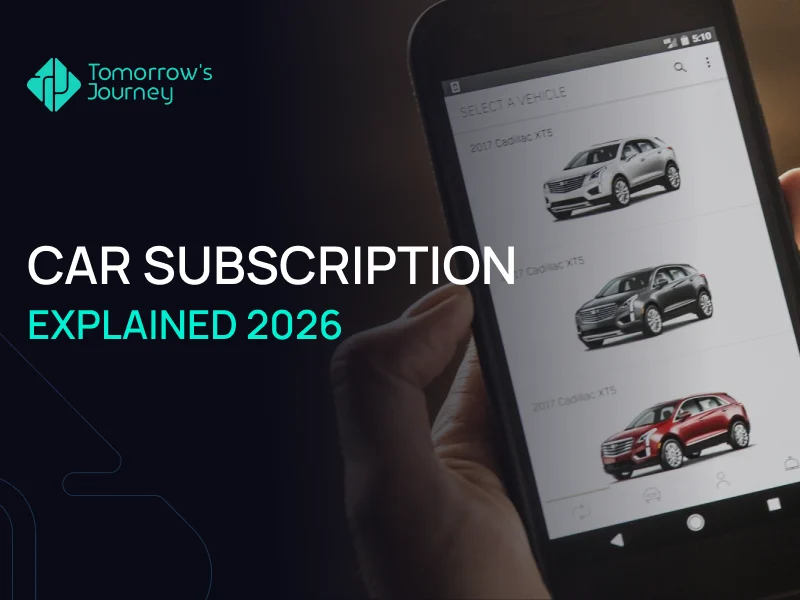
The practical experience of a car subscription is designed to be straightforward from the start. Unlike the traditional car buying process, which involves dealership visits, financing conversations, insurance arrangement, and often weeks of waiting, most car subscription services are built to be handled entirely online.
You browse available vehicles through an app or website, choose a subscription tier or package that suits your budget and usage, complete your verification and payment details digitally, and in most cases have a vehicle delivered directly to your door. The monthly fee covers what you need to drive, and the operator handles everything behind the scenes.
This is what car subscription explained in its most practical terms looks like. No trip to a dealership. No negotiating. No spreadsheet of monthly ownership costs to track. One payment, one vehicle, and the freedom to make a different choice when your needs change.
The flexibility built into most car subscription services goes further than just avoiding paperwork. Many operators offer the ability to swap vehicles based on season, lifestyle changes, or simply because you want to try something different. Need a larger vehicle for a few months? Switch. Want to try an electric car before committing? Subscribe to one. That kind of adaptability is genuinely new in the automotive space and it is a big part of why the model is resonating.
Who Is Actually Using Car Subscription?
Understanding what is car subscription only goes so far without understanding who it is actually for, and the answer is broader than many people initially expect.
The most commonly discussed user is the younger consumer, roughly the 25 to 40 age bracket, who has grown up in a world shaped by subscription services. Netflix instead of buying DVDs. Spotify instead of buying albums. Amazon Prime instead of individual purchases. For this group, paying for access rather than ownership is not a compromise. It is simply how they prefer to engage with products and services. The car subscription vs ownership debate, for many of them, is not really a debate at all. Flexibility wins.
But the appeal extends beyond demographics. Urban dwellers who do not need a car every day but want reliable access when they do. Professionals who relocate regularly and do not want to deal with selling and buying vehicles in new cities. People who want to try an electric vehicle before making a longer-term commitment. Business users who want a simpler, all-inclusive arrangement for company vehicles. All of these groups have real reasons to choose subscription over ownership, leasing, or rental.
The rise of car subscription has also been driven by something broader in consumer culture, a shift toward experience and access rather than possession. The same instinct that makes people choose Airbnb over hotel ownership or streaming over collecting physical media is making car subscription an increasingly natural fit for a growing share of the population.
For a full comparison of how subscription stacks up against the alternatives, the car subscription vs leasing vs rental guide lays out the key differences clearly.
Car Subscription vs Ownership: Why More People Are Choosing Access
The car subscription vs ownership question used to have an obvious answer for most people. You saved up, you bought a car, you owned it. The costs were predictable enough and the sense of having something that was genuinely yours had real value.
That calculation is more complicated now. Vehicle prices have risen significantly. Insurance costs have climbed. Maintenance expenses are harder to predict. Depreciation works against owners from the moment they drive away. And on top of all of that, a growing number of people simply do not want to be tied to a single vehicle for three to five years when their lives and needs change considerably within that timeframe.
Car subscription addresses most of these friction points directly. There is no large upfront payment. Insurance and maintenance are included in the monthly fee. The commitment is short enough that you are not trapped if your circumstances change. And the range of vehicles available through most subscription services means you are not locked into a choice you made based on what felt right eighteen months ago.
That is a compelling set of advantages, which is why the car subscription vs ownership conversation increasingly ends with more people moving toward subscription than away from it.
According to Capital One's guide to how car subscription services work, subscription services allow you to get into a new vehicle without the long-term commitment associated with car loans or leases, with the monthly fee typically covering insurance and maintenance from day one.
Electric Vehicles and Car Subscription
One of the more interesting developments in the car subscription space in recent years has been the growth of electric vehicle subscription offerings. EVs represent a genuinely exciting shift for many drivers, but the upfront cost of buying one and the uncertainty about range, charging, and long-term battery performance create real hesitation.
Car subscription removes most of those barriers at once. You can access an electric vehicle, understand how it fits into your daily life, experience the running costs and charging realities firsthand, and make an informed decision about whether a longer-term electric commitment makes sense, all without having committed significant capital upfront.
Companies including FINN, EZOO, and ONTO have built their entire models around making EV access through car subscription as straightforward as possible. Their growth reflects genuine consumer demand from people who are curious about electric driving but not yet ready to buy. This is a meaningful part of the answer to how does car subscription work in the current market, particularly as the transition toward electric mobility accelerates and more people want a low-risk way to participate in it.
The Technology Behind Modern Car Subscription
A significant part of what makes car subscription explained so different from traditional vehicle access models is the technology that powers it. The entire customer journey, from browsing available vehicles to signing contracts, managing payments, and arranging maintenance, is designed to happen digitally.
This digital-first approach is not just about convenience, though it certainly delivers that. It is about creating an experience that matches the expectations of modern consumers who manage most of their financial and service relationships through apps and online platforms. The operators who have invested seriously in building intuitive, reliable digital experiences are the ones seeing the strongest customer retention and the highest satisfaction scores.
Behind the customer-facing interface, the technology managing fleet availability, contract terms, billing cycles, and vehicle logistics is equally important. Purpose-built platforms handle the operational complexity that makes running a car subscription business at scale actually viable.
To see what the leading platforms are doing to power this experience, explore our guide to the best car subscription software in 2026.
Where the Car Subscription Market Is Heading
The growth trajectory of car subscription has been consistently upward since the model first emerged, and the conditions driving that growth are not going away.
Consumer preference for flexibility over commitment continues to strengthen. The generation that grew up with subscription services across every other category of their lives is now at the age where vehicle access decisions matter. Environmental considerations are pushing more people toward electric vehicles, and car subscription offers one of the most accessible routes into EV driving. And the operational and technological infrastructure supporting the model has matured to the point where operators can deliver a genuinely excellent experience at scale.
The market data reflects all of this. Analysts have consistently projected strong growth in car subscription adoption through the mid-2020s and beyond, with the model expected to account for a meaningful and growing share of all vehicle access arrangements as more consumers discover it and more operators enter the market.
For the full picture of where the market is heading and what is driving the numbers, read our breakdown of car subscription market size, growth and what is driving it.
To Conclude
What is car subscription is a question with a straightforward answer at its core and an increasingly important commercial story behind it. It is a model built around giving consumers flexible, all-inclusive access to vehicles without the burden and commitment of ownership, delivered through a digital-first experience that fits how modern consumers want to engage with services.
For consumers it offers flexibility, convenience, and a lower barrier to trying new types of vehicles including electric models. For operators it represents a recurring revenue model with genuine long-term customer relationship potential. And for the automotive industry as a whole, it is one of the clearest signals that the shift from ownership to access is not a passing trend.
Whether you are a consumer trying to understand your options or an operator thinking about building or scaling a car subscription business, the model is worth taking seriously.
Ready to launch or grow your own car subscription business? Book a demo with Tomorrow's Journey and see how our platform powers operators at every stage. Explore the car subscription software platform.
Frequently Asked Questions
1. What is car subscription and how is it different from leasing?
A car subscription is a flexible, all-inclusive vehicle access arrangement where you pay a recurring monthly fee that typically covers insurance, maintenance, and servicing. Unlike leasing, which locks you into a single vehicle for a fixed period of two to four years with strict mileage limits and end-of-term charges, car subscription offers shorter commitment periods, the ability to switch vehicles, and a simpler overall experience. The key distinction in the car subscription vs ownership and subscription vs leasing comparison is flexibility. Subscription is built around your changing needs rather than a fixed contract.
2. How does car subscription work from a practical standpoint?
How car subscription works in practice is fairly straightforward. You choose a vehicle from an operator's available range, select a subscription package or tier, complete your identity and payment verification digitally, and receive the vehicle, often delivered directly to your door. The monthly fee covers most of what you would normally manage separately as an owner, including insurance and maintenance. When your subscription period ends or your needs change, you can switch vehicles, change your plan, or end the arrangement without the financial complexity of selling an owned vehicle.
3. Who is car subscription best suited for?
Car subscription suits a broad range of people but tends to resonate most strongly with those who value flexibility over long-term commitment. This includes younger consumers in the 25 to 40 age group who are accustomed to subscription-based services, urban dwellers who need occasional rather than daily access, professionals who move between cities regularly, people who want to try an electric vehicle before committing to buying one, and businesses looking for simpler all-inclusive vehicle arrangements for staff. The car subscription vs ownership calculation increasingly favours subscription for anyone whose needs are likely to change within a typical lease or ownership period.
4. Does car subscription include insurance and maintenance?
Most car subscription services include insurance and maintenance as part of the monthly fee, which is one of the primary reasons consumers find the model appealing compared to traditional ownership or leasing. The exact inclusions vary by operator and by subscription tier, so it is worth reviewing what is covered before signing up. Some operators offer modular packages where you can add or remove certain inclusions, while others offer a single all-inclusive rate. Either way, the intention of car subscription explained in its fullest sense is that the subscriber pays one predictable amount and does not have to manage the individual cost components of vehicle ownership separately.
5. Is car subscription available for electric vehicles?
Yes, and EV car subscription has become one of the fastest-growing segments of the market. Operators including FINN, EZOO, and ONTO have built significant parts of their businesses around offering electric vehicles through subscription, specifically because the model removes the upfront cost and commitment barriers that make many consumers hesitant to buy an EV outright. Car subscription lets people experience electric driving, understand the real-world range and charging requirements, and make an informed decision about longer-term EV adoption without having made a large financial commitment upfront.