If a potential customer visits a dealership website late at night, asks a question about a car, and leaves without a response, that opportunity is likely gone by morning. This reality is reshaping how the automotive industry approaches digital engagement.
Artificial intelligence (AI) chatbots have become indispensable across industries such as healthcare, retail, and e-commerce. By streamlining processes, reducing response times, and providing 24/7 support, these tools have proven their value in fast-moving digital environments. But how do AI chatbots fit into the automotive sector today?
For UK dealerships, manufacturers, and automotive platforms, chatbots are no longer a digital novelty. They are becoming a core part of how customers research vehicles, book test drives, manage servicing, and interact with brands throughout the buying journey.
This article explores how AI chatbots in the automotive industry are being used today, where they deliver measurable value, where they fall short, and how they can work alongside human teams to improve the overall customer experience.
Key Takeaways (TL;DR):
- Most car buyers now begin their journey online, often outside business hours
- A chatbot for dealerships helps respond instantly, capture leads, and book test drives 24/7
- When implemented correctly, chatbots can convert conversations into qualified leads
- Poorly designed chatbots still frustrate customers and damage trust
- The strongest results come from combining AI efficiency with human expertise
- Advances in generative AI are making chatbots more natural and context-aware
- For many dealerships, chatbots are now a competitive necessity
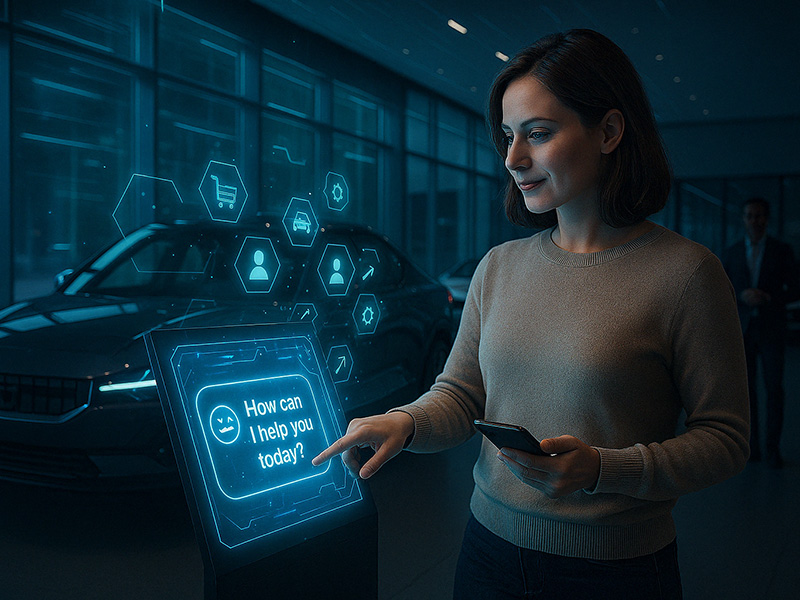
Where Chatbots Fit in the Automotive Customer Journey
The automotive customer journey is rarely linear. Customers research models, compare pricing, explore finance options, book test drives, and return later for servicing or repairs. Each step introduces questions, friction, and potential drop-off points.
This is where a chatbot can make a meaningful difference.
Rather than replacing sales or service teams, an AI chatbot for car dealers acts as a first point of contact. It handles common requests instantly, reduces friction, and ensures customers are supported even when staff are unavailable.
1. Enquiry Handling
AI chatbots often serve as the first interaction a customer has with a dealership online. They can quickly answer questions about vehicle availability, pricing, specifications, fuel efficiency, electric range, or finance options.
Instead of waiting on hold or for an email response, customers receive immediate, accurate answers. This is increasingly important as a growing share of automotive enquiries now take place outside standard business hours.
Example:
A customer might ask, “Which Honda models have hybrid options?”
The chatbot can instantly provide a curated list of models, specifications, pricing, and next steps, keeping the customer engaged rather than pushing them elsewhere.
Many automotive chatbots also support multiple languages, improving accessibility and helping brands serve more diverse audiences.
2. Test Drive Bookings
Test drive bookings remain one of the most practical use cases for chatbots in the automotive industry.
Traditionally, booking a test drive involved form submissions and manual follow-ups. With chatbots integrated into dealership scheduling systems, customers can view availability, select a time slot, and confirm their booking in a single conversation.
For customers, the process feels faster and more convenient.
For dealerships, it reduces manual coordination and improves conversion from enquiry to appointment.
3. Lead Generation Outside Business Hours
While showroom visits occur during the day, online browsing does not. Many customers research vehicles late at night or over weekends.
Chatbots bridge this gap by:
- Capturing contact details
- Asking qualifying questions
- Identifying intent (sales, finance, servicing)
- Passing context to sales teams for follow-up
This ensures potential leads aren’t lost simply because a dealership was closed at the time of enquiry.
4. After-Sales Support
After-sales interactions play a major role in long-term customer loyalty. AI chatbots are increasingly used to support service bookings, warranty queries, maintenance reminders, and basic troubleshooting.
Customers can quickly check availability or book appointments without navigating phone menus or waiting for responses. For dealerships, this reduces administrative workload and allows service teams to focus on more complex cases.
Why Chatbots Matter in Automotive Industry
When it comes to major purchases like vehicles, speed, convenience, and accessibility aren’t just expectations, they’re necessities. With competing dealerships just a click away, customers demand quick answers and seamless experiences. In today’s digital-first world, automotive businesses must rise to this challenge or risk losing valuable leads to more responsive competitors.
AI chatbots are transforming how dealerships and automotive brands engage with customers, offering a powerful way to enhance the buying journey. These intelligent tools can instantly handle a wide range of inquiries, from providing details on vehicle features and pricing to scheduling test drives or service appointments. By delivering real-time responses, chatbots eliminate frustrating wait times and empower potential buyers to make faster, more informed decisions. For businesses, this translates to greater efficiency, higher conversion rates, and a stronger ability to impress and retain customers.
As digital interactions increasingly dictate how people shop for and maintain vehicles, AI chatbots have become indispensable for automotive brands. Beyond speed and convenience, they provide personalised, engaging experiences that make customers feel valued. In a rapidly evolving industry, chatbots offer a competitive edge by streamlining operations, delivering exceptional service, and fostering lasting customer relationships. For dealerships aiming to stand out, AI chatbots are no longer optional; they’re essential
Read: How Generative AI Can Revolutionise the Automotive Industry
Do Chatbots Actually Deliver Results?
The numbers show that chatbots are paying off for the UK automotive sector. Here’s a snapshot of their impact:
- 43% month-on-month (MoM) increase in customer conversations: With AI at the helm, dealerships are seeing sustained engagement, leading to higher conversion rates (Source: AutoConverse UK).
- 50% conversion to qualified leads: Approximately half of chatbot interactions result in actionable leads for dealerships. This means a seamless handoff from AI to sales teams.
- 69% customer preference for chatbots (Salesforce): UK consumers are increasingly choosing chatbots for quick queries over phone calls and long forms.
Beyond the numbers, the benefits are clear:
- Lead Generation: Always-on chatbots ensure no enquiry slips through the cracks, even late at night.
- Faster Response Times: AI drastically reduces waiting times, improving customer satisfaction.
- Reduced Admin Work: Sales and service teams can focus on high-value interactions while chatbots handle repetitive queries.
Challenges in Current AI Deployment
While the potential of AI in automotive is undeniable, its utilisation in the automotive sector remains inconsistent. Many dealerships and rental platforms attempt to integrate AI with mixed results. Chief among these challenges is the deployment of AI chatbots. Many automotive chatbots today still fail to deliver meaningful interactions.
Common issues include:
- Bots that behave like static FAQs
- Repetitive questioning that frustrates users
- Long forms replacing natural conversation
- No clear path to speak with a human
Disconnected experiences erode trust and damage brand perception. Automation must feel helpful, not obstructive.
What About the Human Touch?
A common concern is that chatbots feel impersonal or risk replacing meaningful human interaction. In practice, the most effective systems are collaborative.
- AI handles routine, high-volume requests
- Humans handle complex, emotional, or nuanced conversations
This balance allows customers to get fast answers without losing access to real expertise when it matters most.
Chatbots are not here to sell cars on their own. They guide customers to the right person at the right time.
Enhancing AI Customer Interactions with NLP
Generative AI combined with advanced natural language processing (NLP) is addressing many of the shortcomings of earlier chatbot deployments.
Modern systems can:
- Understand intent rather than relying on rigid scripts
- Handle complex questions about finance, specifications, or services
- Maintain context across longer conversations
- Sound more natural and less robotic
This evolution is helping automotive chatbots move beyond automation and towards true conversational assistance.
Real-World Adoption in the UK Automotive Market
Across the UK, AI chatbots are increasingly used for lead generation, customer support, and follow-ups. Large dealer groups and OEMs alike are investing in conversational tools to improve digital engagement and operational efficiency.
Brands such as Hyundai UK have demonstrated how chatbots can streamline test drive bookings, reduce manual input, and free up staff to focus on higher-value interactions — delivering measurable improvements in both customer experience and conversion.
Meet JRNY Agent: The next generation of AI Chatbot that actually drives results
Worth the Investment?
For UK automotive businesses considering chatbot technology, the answer is a clear “yes” but only when implemented strategically. When thoughtfully deployed, chatbots can elevate customer experiences, streamline operations, and deliver measurable value. However, like any tool, their success depends on how effectively they are tailored to your business needs.
Here are some key strategies to maximise their potential:
- Define Clear Use Cases: Focus on areas where chatbots can deliver the most impact. Start with high-value tasks like handling customer inquiries, scheduling test drives, or offering 24/7 support. A well-defined use case ensures your chatbot addresses real customer needs while lightening the workload for your team.
- Choose the Right AI Platform: Not all chatbot solutions are created equal. Select a platform that is easy to implement and customisable to align with your brand’s tone and workflow. Personalisation is critical to creating a seamless, on-brand user experience that resonates with customers.
- Embrace AI + Human Collaboration: While chatbots are powerful tools, they’re not a replacement for human expertise. Ensure your system allows for smooth transitions from chatbot to human agents for complex issues. This approach not only boosts customer satisfaction but also fosters trust in your brand.
When done right, an AI chatbot for dealerships can make teams more effective, and allow for better management of team resources.
The Road Ahead
The automotive industry continues to move toward digital-first customer journeys. From research and comparison to purchase and after-sales support, more interactions are happening online.
AI chatbots are no longer experimental tools. They are becoming a standard part of how dealerships and automotive brands compete, respond, and build long-term relationships with customers.
The real question is no longer whether chatbots work for the automotive industry - but whether your chatbot experience is better than the alternatives customers can find elsewhere.
As digital engagement becomes central to automotive retail, staying informed matters. Read more industry insights on Tomorrow’s Journey.